

Reviewed · CHAMAREL TOURS
Entrance Ticket to World of Seashells museum
The World of Seashells Museum turns a simple beach find into a lesson in biology, mathematics, culture, and belief. Its collection of 8,000 shells from around the world is said to be the largest in Africa, with displays covering shell patterns, living mechanisms, defense systems, and the ways people have used shells over the centuries.
I like the low price and the amount of information packed into a short visit. I also like the broad scope: this is not just a room of pretty shells, but a look at marine life, the shell theorem, cultural traditions, and myths linked to the origin of life. The main drawback is that the visit can feel demanding if you have a short attention span, since several thousand objects call for patient looking.
Key points to know before you go
- 8,000 shells from across the world: The collection offers far more variety than a typical beachside display.
- Science beyond shell collecting: You’ll learn about shell structure, living mechanisms, defense systems, and spiral mathematics.
- A strong cultural angle: Displays explain how shells have been used by people and how they appear in myths and legends.
- A good stop for families: Children can look for unusual shapes and colors while picking up basic lessons about nature.
- Allow 45 to 90 minutes: A quick visit is possible, but careful reading takes longer.
- Good value at $7: The price is modest for a museum with such a large collection.
Entering the World of Seashells in Chamarel
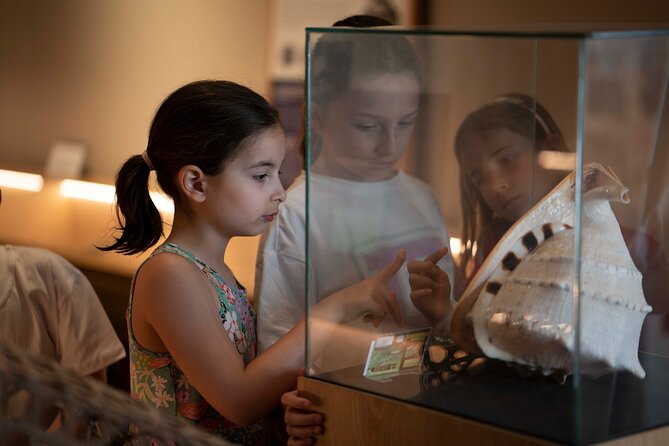
Chamarel is best known for its natural sights, so this museum offers a useful change of pace. You come in from the outdoor attractions and spend time looking closely at objects that are easy to overlook on the beach.
The collection presents shells as more than souvenirs. You’ll see examples from many parts of the world, with information about their form, colors, patterns, and purpose. That wider setting matters. A shell is not simply a hard spiral left behind by the sea. It is part of an animal’s protection and survival system.
The museum works especially well for people who already collect shells or enjoy marine life. One particularly positive impression is the careful presentation of the displays. The shells are arranged so you can compare their shape and color, rather than seeing one large pile of similar objects.
If you have never thought much about shells, the museum may change that. You’ll begin to notice how much variety exists within familiar types such as mussels and other shellfish. The exhibits also connect the natural science to human use, giving the visit more range than a simple identification display.
A few more Chamarel half-days to weigh up
- North Day Tour, Botanical Garden, Sugar Museum, Rum Tasting
★ 5.0 · 3 reviews
What you’ll see during the 45 to 90 minute visit
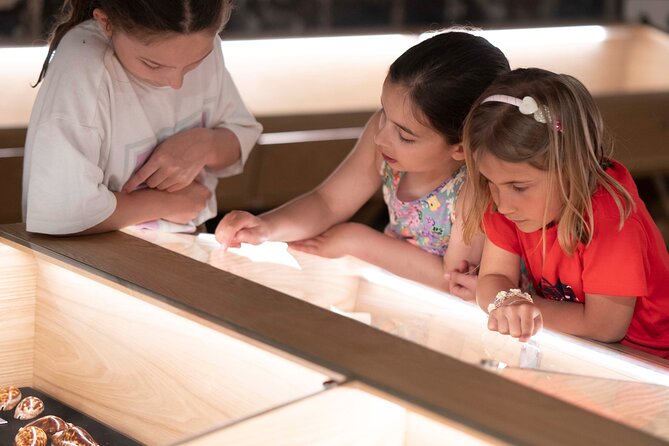
The stated visit time ranges from 45 minutes to 1 hour 30 minutes. That wide range makes sense. You can walk through quickly in about 20 to 30 minutes, but the written information rewards a slower pace.
On a short visit, you’ll mainly see the collection and absorb the basic facts. This suits families with younger children, people fitting the museum between other Chamarel stops, or anyone who wants a brief indoor activity.
Allow closer to 90 minutes if you plan to read the descriptions. The museum covers shell morphology, living mechanisms, defense systems, patterns, colors, environmental value, and cultural uses. Those subjects take time if you want more than a quick look.
I would not treat the museum as a rushed photo stop. The best displays invite comparison. Look at the curves, openings, textures, and repeated patterns. Then read why the shell has that form. The information gives meaning to the visual display.
A short visit still has value, but the museum’s main strength is its detail. If you enjoy museums that ask you to slow down, use the longer estimate. If you are traveling with children, set a simple goal, such as finding the most unusual shape or the shell with the most striking color.
Shell biology, defense, and the living creatures behind the display
The museum explains how shells work as part of a living system. You’ll learn about their morphology, or physical structure, and the ways shells help protect the animals that create them.
That subject gives the collection a practical purpose. Instead of only asking which shell looks nicest, you can ask why it developed that shape or pattern. The displays also discuss defense systems, showing how the shell relates to survival.
The collection includes beautiful patterns and colors, but the museum does not treat appearance as the whole story. The shell’s design has a function. Even the form that looks most decorative may help with protection or life in the sea.
The environmental information is another useful part of the visit. The collection connects shells to the ecosystem, helping you understand that these objects are part of a larger marine world. That is an important point for children, who may otherwise see shells only as beach keepsakes.
The museum cannot replace a full marine biology course, and the available information does not describe guided demonstrations or live animals. Still, it gives you a solid introduction to the subject through objects that are easy to examine.
The shell theorem and the mathematics of perfect spirals
One of the more unusual subjects here is the shell theorem. The museum uses shell shapes to explain the mathematical origin of their spiral curves.
This adds a welcome twist. You are not only looking at natural beauty, but also considering the geometry behind it. The curves that seem perfectly designed have a mathematical explanation, and the displays help you connect that idea to what you see in front of you.
The mathematics may appeal more to older children and adults than to very young visitors. Even if you do not follow every detail, the subject gives you another way to view the collection. A spiral is not merely a pretty pattern. It reflects growth and structure.
This is one reason I would avoid racing through the museum. The shell theorem is the sort of idea that benefits from a quiet look at the examples nearby. The collection becomes a visual aid for the explanation.
If your main interest is photography, you may spend less time with this section. If you enjoy science, design, or natural patterns, it may be one of the most memorable parts of the visit.
Same lagoon, a completely different day out:
- Mauritius: Private South Tour with Pickup
★ 4.9 · 940 reviews - Full-Day Catamaran Cruise to Île aux Cerfs with BBQ Lunch
★ 4.5 · 455 reviews - Mauritius: Private Southwest Day Tour
★ 4.8 · 312 reviews - Mauritius: Chamarel 7 Colours & Waterfalls, South-West Tour
★ 4.6 · 287 reviews
Myths, legends, and the human use of shells
The museum also follows shells beyond the sea. You’ll learn how people have used shells across centuries and how shell symbols appear in myths and legends around the world.
These displays add a human layer to the natural history. Shells have long carried meanings connected with life, the sea, trade, adornment, and belief. The museum presents a common thread in stories where the shell is linked to the origin of life.
This cultural material makes the experience broader than a display of marine specimens. You can look at a shell as a biological object, a mathematical form, and a symbol used by people.
The information may be especially useful if you are visiting with children or teenagers who need more than visual appeal to stay interested. A shell with a story behind it is easier to remember than an unidentified specimen in a case.
Keep in mind that the museum is still a compact attraction, not a large anthropology museum. The supplied information does not give a full list of the cultures represented or name particular myths. You should expect a general world view rather than a detailed study of one tradition.
Why children may enjoy this stop
The museum is promoted as a memorable experience for children, and the collection has qualities that make that understandable. Shells come in unusual forms, colors, and sizes, giving young visitors plenty to compare.
You can turn the visit into a simple observation game. Ask your child to find the strangest shell, the smoothest shell, the shell with the strongest spiral, or the one that looks most unlike a beach shell. Those questions help keep the focus on discovery without requiring a formal lesson.
The science sections also offer natural talking points. You can explain that the shell belonged to a living creature, that its shape can help protect it, and that its spiral has a mathematical pattern.
The main caution is attention span. Several thousand shells can become visually repetitive if you move through every case at the same speed. Keep the visit flexible. A 20 to 30 minute stop may be enough for a young child, while older children may enjoy the written explanations and the shell theorem.
I would pair this museum with another Chamarel sight rather than making it the only activity of the day. It works best as a focused indoor stop that gives everyone a break from outdoor touring.
Is $7 a good value?
At $7 per person, the museum is an affordable addition to a day in Chamarel. The price is low enough that you do not need to spend hours inside to feel you received value.
The collection is also large enough to justify the admission. You are paying to see 8,000 shells, but the real value comes from the information around them. The explanations cover biology, environmental importance, mathematics, culture, and legend.
I see the price as especially fair for families. A family can make a short visit without committing to the cost or time of a major attraction. Children can enjoy the colors and shapes, while adults can spend more time with the scientific and cultural material.
The value depends on your interest. If you love the sea, collect shells, or enjoy natural history, $7 is easy to justify. If you do not enjoy displays that require reading and close observation, the museum may feel less rewarding after the first few rooms.
The ticket is mobile, which keeps the purchase simple. Admission is included, and confirmation is received at booking. The experience is listed with a 9:00 am start time, but the supplied details do not provide a full daily opening schedule, so check the operating information before setting out.
Timing, access, and practical planning
The museum is in Chamarel, Mauritius, and is near public transportation. Service animals are allowed, and most people can participate.
You should plan for a visit of at least 45 minutes if you want to see the main displays without rushing. Set aside up to 1 hour 30 minutes if you enjoy reading and comparing the collection.
Arriving early is sensible. One reported visit found the building closed before the stated last entry time on a Sunday afternoon, with 3:00 pm given as the last entry. Because that account also described an attempted visit at 2:40 pm, I would not arrive close to closing. The available details do not provide a full explanation of that incident, so an early visit is the safest choice.
The experience requires good weather under its booking terms. That may seem unusual for a museum, but the visit is often part of a wider Chamarel outing, and poor weather can affect the overall activity. If the experience is canceled because of weather, you can be offered another date or a full refund.
Free cancellation is available if you cancel at least 24 hours before the start time. Changes or cancellations made within 24 hours are not accepted for a refund.
Who should visit the World of Seashells?
I would recommend this museum to several kinds of visitors:
- Families looking for a short, affordable activity with a clear educational angle.
- Shell collectors and anyone who enjoys marine life.
- Adults interested in natural patterns, mathematics, or cultural traditions.
- People visiting southern Mauritius who want an indoor stop near Chamarel.
- Anyone who appreciates carefully arranged collections and written explanations.
I would be more cautious if you dislike museums based on observation and reading. The collection is large, but the experience does not appear to depend on rides, performances, or hands-on activities. Its appeal comes from looking closely and learning why the shells matter.
It is also not the best choice if you only have a few minutes. You can see it quickly, but the information is what gives the visit its value. A rushed walk through the cases will miss much of what makes the museum different from a standard shell shop.
Should you book this museum ticket?
Book it if you are already visiting Chamarel and want an inexpensive stop with more substance than a souvenir display. The combination of 8,000 shells, marine science, mathematics, environmental information, and cultural stories gives the museum a clear purpose.
You should allow extra time if you enjoy reading, and arrive well before the reported 3:00 pm last entry. Families can keep the visit short and playful, while shell enthusiasts may want the full 90 minutes.
Skip it only if your schedule is packed or if you know that large collections of small objects lose your interest quickly. For most visitors with a spare hour in Chamarel, the $7 price makes this an easy addition, especially on a day when you want a quieter stop between outdoor sights.
FAQ
Where is the World of Seashells Museum located?
The museum is located in Chamarel, Mauritius.
How much does admission cost?
The entrance ticket costs $7 per person.
How many shells are in the museum?
The museum presents 8,000 seashells from around the world.
How long does a visit take?
You should allow approximately 45 minutes to 1 hour 30 minutes. A shorter visit of about 20 to 30 minutes is possible if you move through the displays quickly.
What time does the experience start?
The listed start time is 9:00 am.
Is the ticket available on a mobile phone?
Yes. The experience offers a mobile ticket.
Are service animals allowed?
Yes. Service animals are allowed.
What is the cancellation policy?
You can cancel at least 24 hours before the start time for a full refund. Cancellations or changes made less than 24 hours before the start time are not accepted for a refund. If poor weather causes the experience to be canceled, you will be offered another date or a full refund.
Just added around Chamarel
- Chamarel: Curious Mauritius Entry Ticket★ 4.0 · 3 reviews
- Fascinating Nature Tour Incl Ebony Forest, 7 Coloured Earth,Lunch★ 5.0 · 3 reviews
- Mauritius: Private Southwest Tour with Pickup★ 5.0 · 8 reviews
- Food Tasting & Market Shopping: Private Guided Tour in PORT LOUIS★ 4.5 · 9 reviews
- Chamarel: Sunset Mountain Hike★ 4.9 · 9 reviews
- The Gorgeous South of Mauritius: Full-day tour incl Tea Factory & Crocodile park★ 4.0 · 10 reviews
- Mauritius: Sunrise Mountain Hike with Southwest Road-trip★ 5.0 · 10 reviews
- From Chamarel: Waterfall Eco-Hike Adventure★ 4.8 · 11 reviews
Chamarel Tours, compared.


Full-Day Catamaran Cruise to Île aux Cerfs with BBQ Lunch
Read our review →



Ebony Forest Reserve Chamarel – Take a Hike Tour
Read our review →

Browse the lists this tour appears in