
Reviewed · PORT LOUIS TOURS
ROUTE OF INDIAN SPIRITUALITY
Mauritius reveals its Indian spiritual life through temples, legends, pilgrimage, and festivals, and this private tour gives you that story in a compact morning. I like the three very different temple stops and the way guide Eric connects their deities to slavery, Mauritian history, and life today. I also like the chance to ask direct questions in a small private group.
The main consideration is pace. Three hours covers a lot, so this is best for learning and seeing key places rather than lingering at each temple. The temple visits are also religious experiences, not standard sightseeing stops, so you should come ready to listen and follow local guidance.
Key points to know before booking
- Three temples in one morning: Visit the temple at Triolet and two Tamil temples at Cap Malheureux.
- A personal guide: Eric explains the deities, stories, festivals, and place of Indian spirituality in Mauritius.
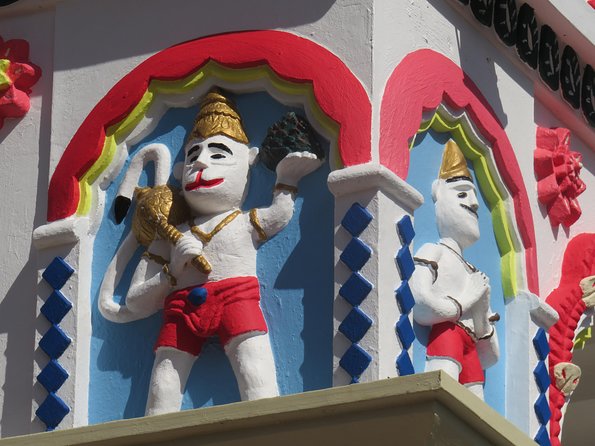
- Questions are welcome: Learn why Shiva’s neck is blue, why a lingam is watered, and why Ganesh has one broken tusk.
- A private outing: Only your own group takes part, which gives you more room to ask questions.
- A strong cultural focus: The tour links religion with slavery, Mauritian identity, and modern social life.
- Festival connections: Depending on the date, you may be offered a chance to follow a procession or attend prayers.
Why this tour adds meaning to a Mauritius holiday
Many visits to Mauritius focus on beaches, viewpoints, and food. Those are good reasons to come, but they tell only part of the island’s story. Indian spirituality is woven into Mauritian family life, public celebrations, pilgrimage routes, music, and community identity.
This tour gives you a way to see that side of the country without needing to arrive with a background in Hindu or Tamil traditions. Eric uses stories and questions to explain what you are seeing. That matters because a temple can be beautiful while remaining difficult to understand from the outside.
You will hear about Hindu religion and Tamil religion, along with the ways those traditions overlap and differ in Mauritius. You will also look at how practices brought by Indian communities became part of the country’s shared public life. The conversation includes slavery and the island’s past, but it also asks what these traditions mean in Mauritius today.
I like that the tour is playful without treating worship as a curiosity. Questions about blue skin, broken tusks, and constantly watered lingams make the subject easier to approach. At the same time, the focus remains respectful and tied to actual beliefs and festivals.
The private format helps here. Since only your group participates, you can pause when a symbol confuses you or ask for a clearer explanation. A larger group can make a religious site feel like a stop on a schedule. A private tour gives the discussion more room.
A few more Port Louis half-days to weigh up
- Mauritius: Exclusive South West Tour
★ 4.8 · 523 reviews - Port Louis: Street Food & City Tour
★ 4.7 · 518 reviews - Mauritius North: Private Paradise Tour with Gardens, Markets
★ 4.8 · 446 reviews
Triolet and the beginning of the Maha Shivaratree pilgrimage
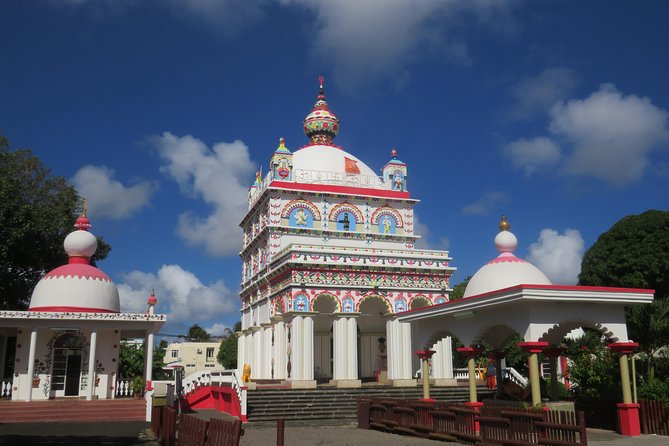
The first stop is the temple at Triolet, where the first Maha Shivaratree pilgrimage in Mauritius began in 1898. That fact gives this visit a clear place in the island’s religious story.
Maha Shivaratree is linked to Shiva, one of the central Hindu deities discussed during the tour. You will learn what the festival celebrates and why pilgrimage has such importance. The Triolet stop is not just a chance to enter a temple and take a few pictures. It is a place to consider how a religious tradition became part of Mauritian public life over time.
The tour can help you read the site through its practices. Why is the lingam kept watered? Why does Shiva have a blue neck? These are not random details. They are openings into stories and beliefs that may otherwise seem mysterious if you are seeing them without explanation.
The stop lasts about an hour, making it the main visit of the morning. That extra time is useful. You are more likely to get a proper explanation here, rather than a quick look followed by a return to the vehicle.
Admission is free, but the value comes from the interpretation. Without a guide, you might recognize a few figures or architectural features but miss the meaning behind them. Eric’s role is to connect the place to pilgrimage, deities, and Mauritius itself.
The first Tamil kovil at Cap Malheureux
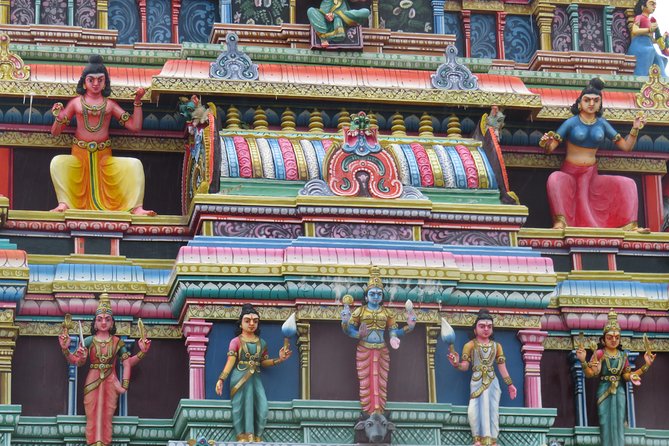
The tour then moves to Cap Malheureux for a first Tamil temple, or kovil. This is a shorter visit of about 30 minutes, but it changes the focus from the Triolet pilgrimage site to Tamil worship in northern Mauritius.
Eric covers the temple’s history, legends, and myths. Those three strands matter because religious sites are not explained only through dates and construction. Stories show how a place is remembered and how people give meaning to it.
You will also have a chance to ask how Tamil practice fits into the wider religious picture. The tour raises a useful question: are Hindu and Tamil traditions separate, connected, or understood differently by different communities? You do not need to settle that question before arriving. The point is to gain a better sense of how religion works within Mauritian society.
Cap Malheureux gives the morning a different setting from Triolet, and visiting two Tamil temples in the same area lets you compare them. The second and third stops are brief, so do not expect a long period of quiet observation at either one. The benefit is range: in one morning, you see several expressions of Indian spirituality rather than a single building in isolation.
The 15-meter Muruga statue
The second Cap Malheureux stop is another Tamil temple, known for its imposing 15-meter statue of Muruga. The statue is a replica of the Muruga figure at the entrance to Batu Caves in Kuala Lumpur.
This is likely to be the most immediately striking sight of the morning. A large statue gives you a clear visual reference for the deity, while Eric’s explanation helps place Muruga within Tamil religious life. The visit lasts about 15 minutes, so you will need to take in the setting quickly.
That short stop is both a strength and a limitation. It keeps the tour moving and adds a memorable landmark without turning the morning into a long temple circuit. On the other hand, anyone hoping for extended time at each location may find the final visit too brief.
I would treat this as a focused stop, not a full temple study. Look closely, listen to the explanation, and use the private setting to ask the question that comes to mind. The statue’s connection to Batu Caves also gives the tour a wider regional link, showing that Tamil religious imagery crosses national borders.
Same lagoon, a completely different day out:
- Port Louis: Street Food & City Tour
★ 4.9 · 377 reviews - Port-Louis Street Food Tour
★ 5.0 · 264 reviews - TAXI north guided tour.
★ 5.0 · 171 reviews - Mauritius: Port Louis and Northern Highlights Full-Day Trip
★ 4.3 · 161 reviews
The stories behind Shiva, Ganesh, and Muruga
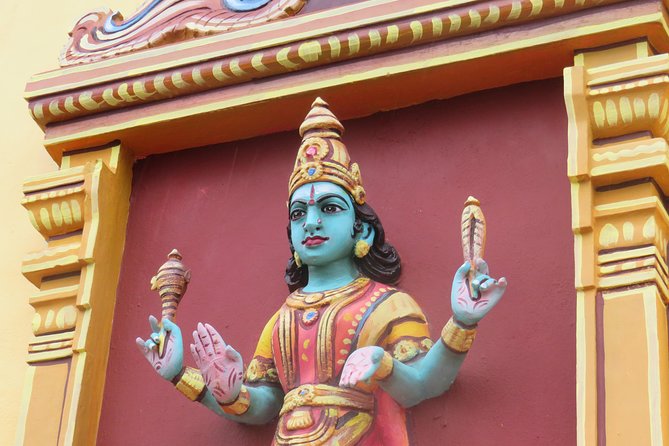
A major reason to choose this outing is the way it turns familiar religious figures into understandable stories. Even if you know the names Shiva or Ganesh, you may not know the meaning behind the details you see.
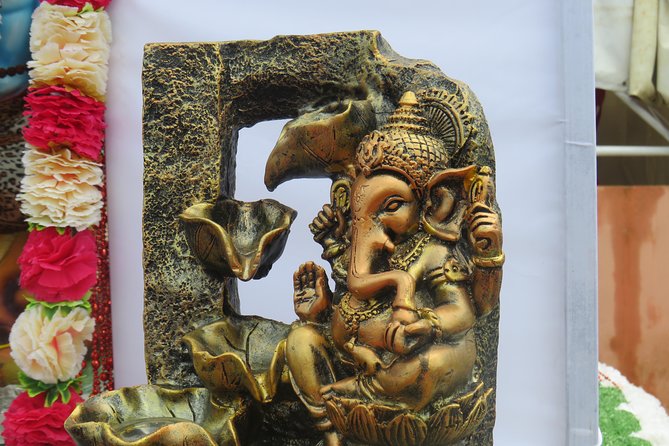
The tour addresses why Shiva has a blue neck. It also explains why the lingam should be constantly watered, a practice that can seem puzzling if you do not know its religious meaning. Ganesh’s broken right tusk becomes another entry point into mythology and symbolism.
These questions keep the morning accessible. You are not expected to memorize a list of deities or religious terms. Instead, you move from one visible feature to the story attached to it.
Muruga adds another important figure, particularly in the Tamil temple visits. The tour makes room for the fact that Mauritius contains several Indian religious traditions, with their own practices, festivals, and ways of expressing devotion.
I appreciate this approach because it avoids turning the temples into a checklist. You are not simply told that a statue represents a certain god. You are given a reason to look at it, think about it, and connect it to the people and celebrations around it.
Festivals that bring the temples into public life
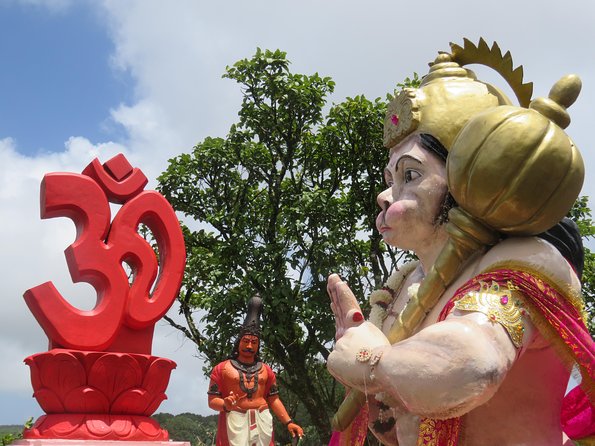
The tour discusses Maha Shivaratree, Cavadee, Ganesh Chaturti, Ganga Snan, and Govinden. These names may be unfamiliar, but they point to a central idea: religious life in Mauritius is often public, communal, and tied to movement, prayer, and ceremony.
You will learn what these festivals celebrate and how they relate to the traditions represented at the temples. This makes the tour useful even if your visit does not fall during a festival. The buildings make more sense once you understand the occasions that bring people together there.
On specific festival dates, the tour also proposes attending and following processions or prayers. That option depends on timing, so it should not be treated as a guaranteed part of every morning. If your visit lines up with one of these dates, ask in advance what can be included and how the schedule will work.
Festival participation would add a strong connection to living religious practice. Still, the standard three-hour visit has value on its own. You receive the background needed to understand what you might see elsewhere in Mauritius, even if no procession takes place during your booking.
Religion, slavery, and modern Mauritian identity
The strongest part of the tour may be its effort to connect temple life with the wider story of Mauritius. The discussion includes slavery and the place of Indian communities in the island’s past, then moves toward the present day.
That broader frame helps you avoid a common mistake: treating religion as something separate from politics, family, migration, and social identity. In Mauritius, the question is not only what happens inside a temple. It is also how traditions shape public celebrations and the way people understand the country.
The tour asks if visitors are really as culturally distant from these traditions as they might first assume. You do not need to share the beliefs to recognize familiar themes such as family, celebration, pilgrimage, storytelling, and community duty.
I would choose this tour if you want more than pretty buildings. It offers a route into the human side of Mauritius, with the temples acting as places where history and current life meet.
Timing, meeting point, and private-tour value
The tour begins at 9:00 a.m. at La CroisetteMU on Chemin Vingt Pieds in Grand Baie. It ends back at the same meeting point, which makes the morning easy to fit around other plans.
The full outing lasts about three hours. The stated stop times total roughly one hour and 45 minutes, with the remaining time allowing for travel and transitions between Grand Baie, Triolet, and Cap Malheureux. You should keep the rest of your morning flexible rather than scheduling something that requires a precise arrival immediately afterward.
The price is $64.61 per person. For a private tour, that is a fair value if you want guided cultural context rather than transport alone. The price makes less sense if your main goal is simply to see temple exteriors, since admission to the sites is free and the visits are close to one another in the north.
The real purchase is Eric’s time and explanation. You are paying to understand what you see, ask questions, and connect separate traditions to Mauritian history. If your group is interested in religion, culture, or local identity, that added context can justify the cost.
Since only your group participates, the value improves for couples, families, or friends who want a discussion shaped around their own questions. It is also a practical choice if one person in your group knows little about Hindu or Tamil traditions and another has a strong interest.
The tour has a mobile ticket, confirmation is provided when you book, and the meeting point is near public transportation. Service animals are allowed, and most people can participate. The information provided does not describe detailed walking distances or temple access arrangements, so contact the provider if anyone in your group has specific mobility needs.
What to keep in mind at religious sites
This is a respectful cultural visit, not a staged show. You should listen closely to instructions at each temple and let the guide explain what is appropriate.
The supplied information does not set out a dress code, photography rule, or footwear policy. Those details can vary by temple, so ask Eric before taking photographs or entering a worship area. That small bit of care helps keep the visit comfortable for both your group and people using the temples for prayer.
Good weather is required. If poor weather forces cancellation, you can choose another date or receive a full refund. You can cancel for a full refund up to 24 hours before the 9:00 a.m. start time, but changes or cancellations made less than 24 hours ahead are not accepted and are not refunded.
Who should book this three-hour temple tour
I would recommend it to you if you want to understand Mauritius beyond its coastal attractions. It suits visitors who enjoy asking questions, hearing legends, and learning how religion shapes a country’s identity.
It is especially useful for anyone unfamiliar with Hindu or Tamil traditions. The guide’s explanations give you enough context to recognize the main deities and festivals without requiring prior study.
Families may also appreciate the playful questions about Shiva, Ganesh, and the lingam. They provide clear starting points for children and adults alike, though the religious and historical discussion will suit groups ready to listen.
You may want to skip it if you prefer an unstructured morning, long periods at each site, or a tour focused mainly on architecture. The final temple visit is short, and the outing places more weight on explanation than on extended independent exploration.
The high rating from the seven recorded reviews is consistent with the tour’s strongest feature: Eric’s ability to explain both religion and regional history in detail. One specific response praises his thorough approach across several temples and his extensive understanding of the region. That is the kind of guide you want for a subject where context matters more than a quick photo stop.
Should you book the Route of Indian Spirituality?
Book it if you want a private, focused introduction to the Indian religious traditions that help shape Mauritius. The Triolet pilgrimage connection, the two Tamil temples at Cap Malheureux, and the 15-meter Muruga statue give you a varied morning, while Eric’s stories provide the meaning behind what you see.
At $64.61 per person, the outing is worth it for interpretation and access to a thoughtful conversation, not for admission tickets. Keep your expectations clear: this is a three-hour cultural lesson with temple visits, not a full-day religious tour or guaranteed festival attendance.
If you are staying near Grand Baie and want to understand the island’s people and traditions as well as its scenery, this is a smart choice. If you only want quick sightseeing, spend your morning elsewhere.
FAQ
Where does the Route of Indian Spirituality start?
The tour starts at La CroisetteMU, Chem. Vingt Pieds, Grand Baie 30517, Mauritius, at 9:00 a.m.
Where does the tour end?
The activity ends back at the meeting point at La CroisetteMU in Grand Baie.
How long does the experience last?
The tour lasts approximately three hours.
Is this a private tour?
Yes. Only your own group participates in the activity.
What temples will I visit?
You will visit the temple at Triolet, a Tamil temple at Cap Malheureux, and a second Tamil temple at Cap Malheureux with a 15-meter statue of Muruga.
Can I cancel for a full refund?
Yes. You can cancel up to 24 hours before the experience start time for a full refund. Cancellations or changes made less than 24 hours before the start are not accepted or refunded.
Just added around Port Louis
- Insta-Worthy City Tour: Unveil Picture-Perfect Spots★ 5.0 · 3 reviews
- Southern Mauritius: Volcanoes & Coloured Earth★ 5.0 · 3 reviews
- North Tour Of Mauritius With Street Food tasting★ 5.0 · 3 reviews
- Port Louis: City Tour with Street Food Tasting★ 5.0 · 3 reviews
- Cultural Delights & Heritage Treasures in the City★ 5.0 · 3 reviews
- Mauritius Private South West Tour★ 5.0 · 3 reviews
- Creole Culinary Workshop★ 5.0 · 3 reviews
- 1 way Airport transfer★ 4.0 · 3 reviews
Port Louis Tours, compared.
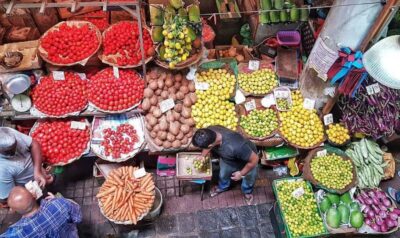

Mauritius North: Private Paradise Tour with Gardens, Markets
Read our review →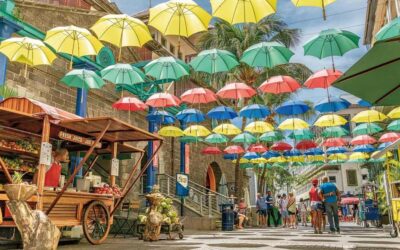
Port Louis and Northern Highlights Full-Day Trip
Read our review →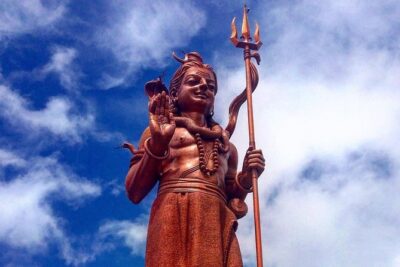
Enchanting South of Mauritius: Full-day tour Incl CASELA Park, Lunch & Transfer
Read our review →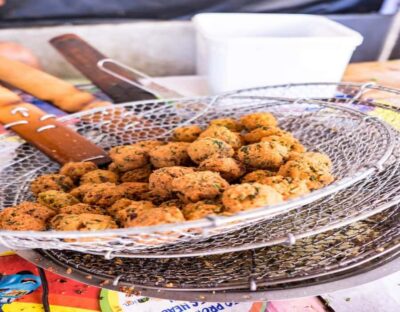
Port Louis: Street Eats and City Highlights Walking Tour
Read our review →Browse the lists this tour appears in